devket
Start a project
devket
Theme
Start a project

Restaurant POS Software

A tablet-first operating platform that turns fragmented service, ordering, and payment steps into one connected workflow floor staff can learn in a shift.
Industry
Hospitality
Project type
Business Software · POS
Services
Product strategy, UX/UI design, Design system, Frontend development, Backend development, QA
Technology
React, TypeScript, Node, PostgreSQL, Stripe
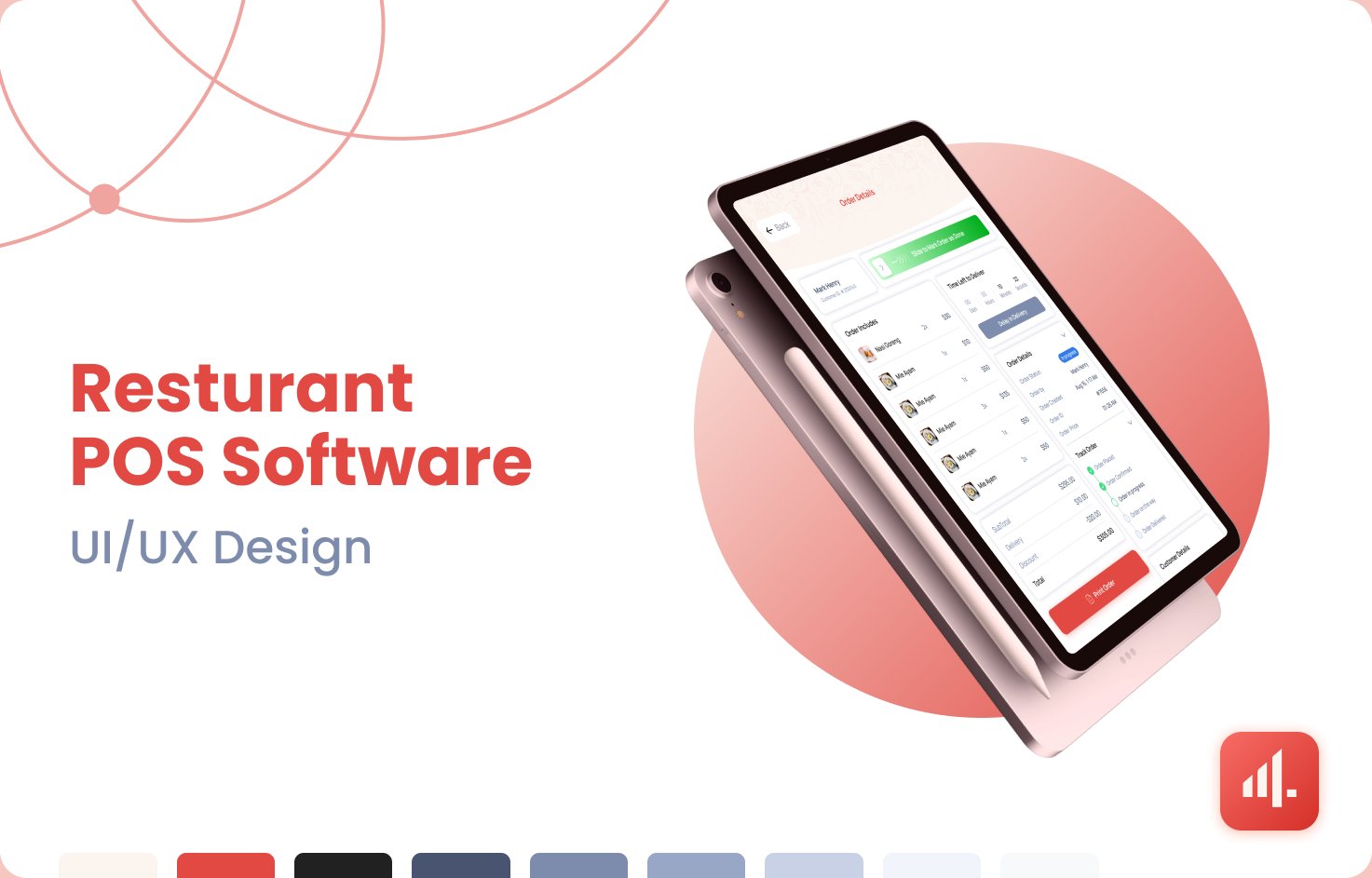
Restaurant POS Software UI/UX design cover, two tablets showing the order-details screen, with the product palette below.
Overview

Restaurant POS Software is an operating platform for full-service and quick-service restaurants. It serves front-of-house staff, managers, and kitchen teams, connecting orders, menus, payments, customer records, and daily operations in a single tablet-first product Devket designed and built end to end.

Challenge

The teams we spoke to were running service across a patchwork of tools, a legacy till, printed tickets, a separate payments terminal, and spreadsheets for menu changes. Every handoff between them was a chance to lose an order or mis-charge a table.

The people most affected were the ones with the least time to spare: servers mid-rush and managers trying to reconcile a night’s takings. New staff took days to become confident, and turnover meant that cost was paid again and again.

Commercially, the gaps showed up as slower table turns, avoidable comps, and end-of-day reconciliation that ran long. Any solution had to work on modest tablet hardware, survive patchy back-of-house Wi-Fi, and stay legible under fluorescent light and motion.

Devket’s role
Product strategyUser researchInformation architectureUX/UI designDesign systemFrontend developmentBackend developmentQALaunch support
Solution

We rebuilt the night around a single order object that every screen reads from and writes to, so the floor, the kitchen, and payments always see the same state.

One order, every surface

Table, order, kitchen ticket, and payment are views of one record, no re-keying, no drift between devices.

Learnable in a shift

A large-target, high-contrast layout and a shallow menu tree let new staff run a table without training.

Resilient by design

Actions queue locally and sync when the network returns, so a dropped connection never stops service.

Room to grow

Menus, modifiers, and floor plans are data, not code, new locations and formats onboard without a rebuild.

Product experience

Inside the product

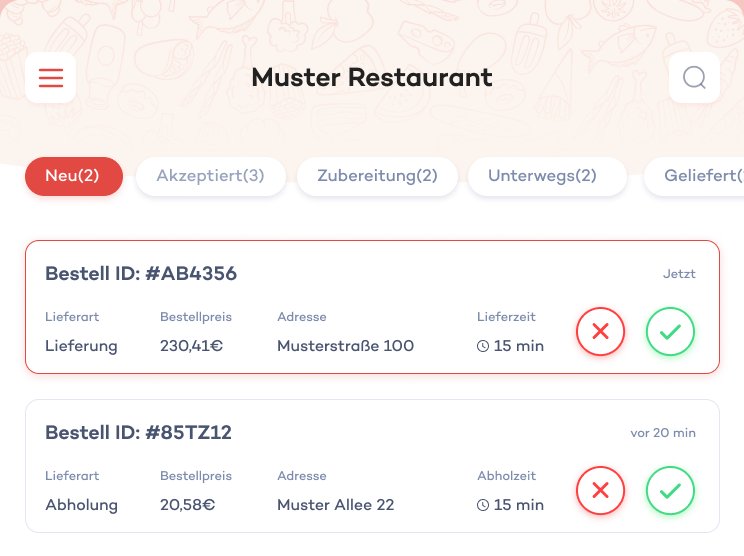
The order queue on a phone, showing new delivery and pickup orders with price, address, and delivery time, each with reject and accept buttons.

The order queue

Incoming orders arrive in a status-tabbed queue, new, accepted, preparing, on the way, delivered, with delivery type, price, address, and time on one line, and accept or reject as a single tap during a rush.
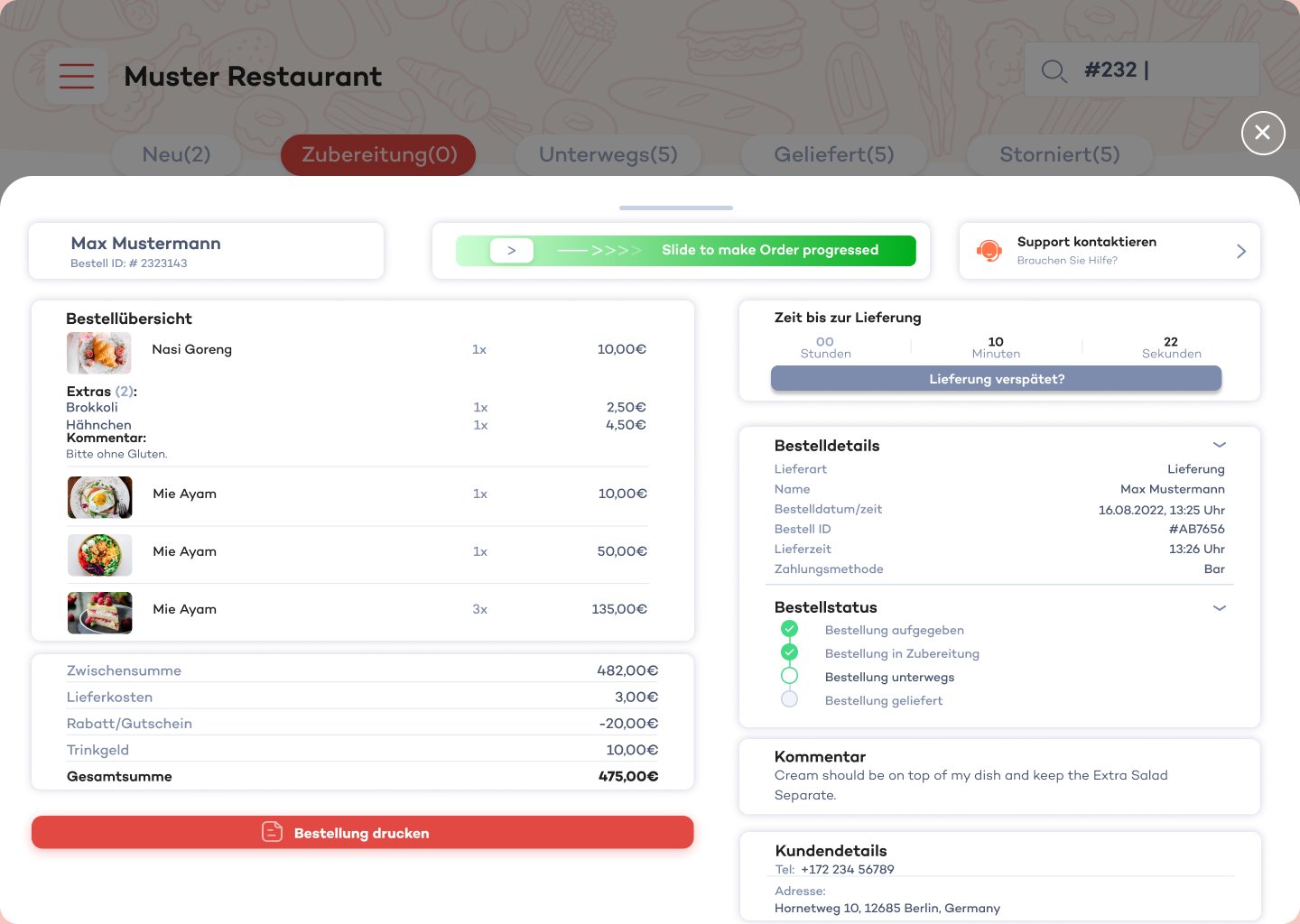
The tablet order-details view with order overview, extras and comments, totals, print action, delivery countdown, order status timeline, and customer details.

Order details and status

One screen carries the whole order: line items with extras and kitchen notes, totals, the delivery countdown, a slide-to-progress control, the status timeline, and customer details, so no one switches screens mid-service.
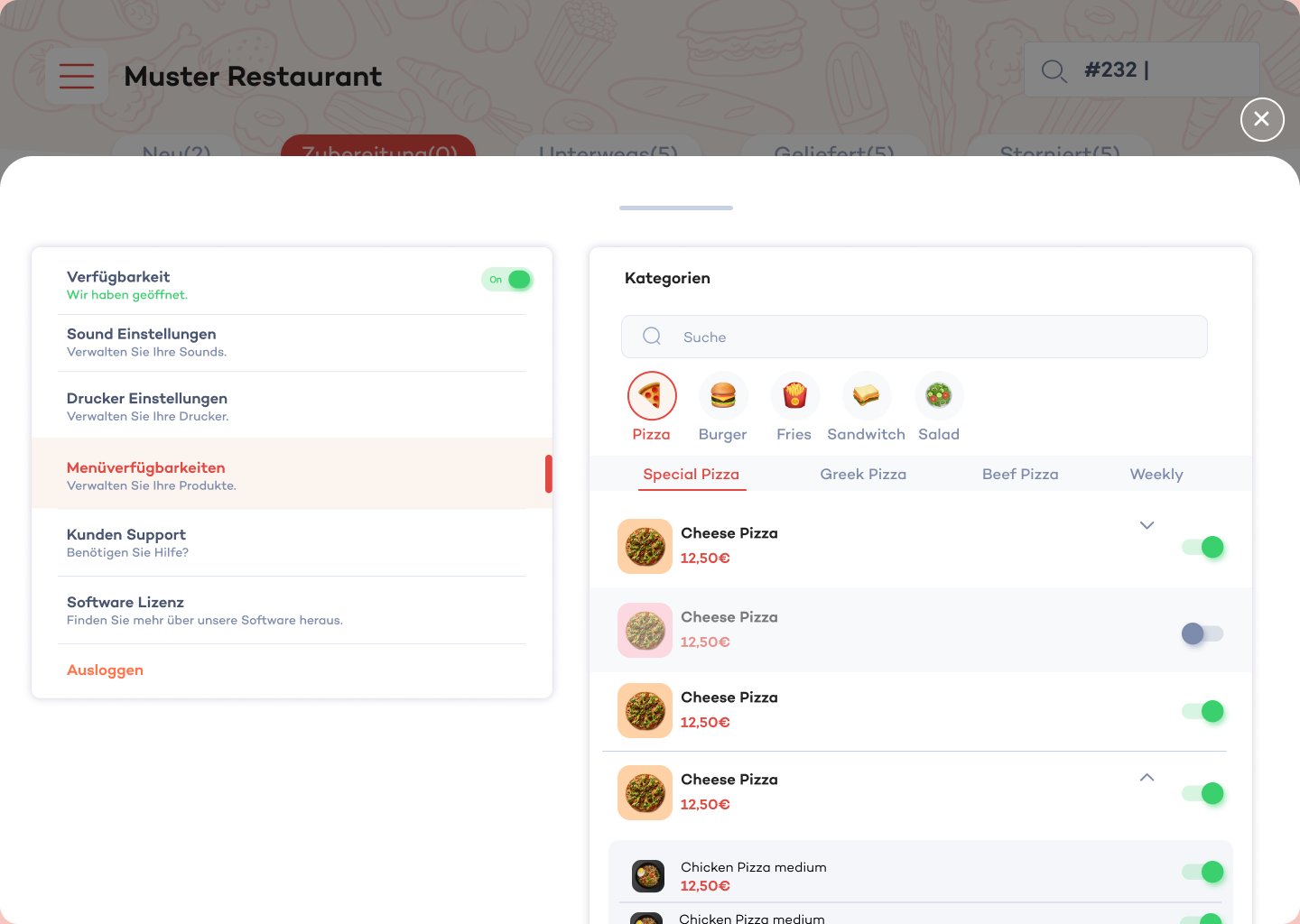
The menu-availability settings screen with category filters, product list, and per-item and per-variant availability toggles.

Menu availability

Staff switch dishes and variants on or off by category as stock changes, so the storefront reflects the kitchen without anyone editing a menu file.
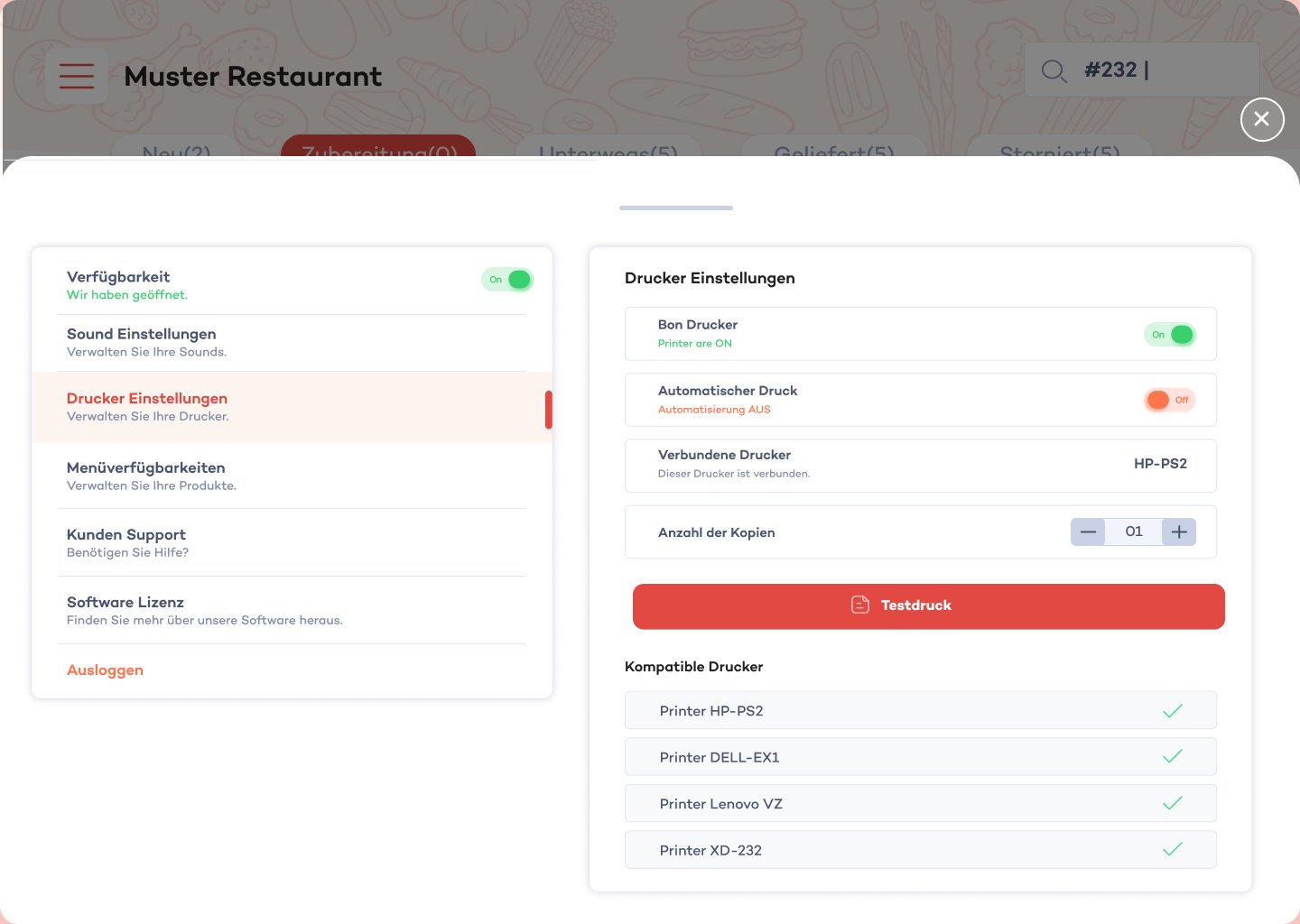
The printer settings panel showing receipt printer and automatic print toggles, the connected printer, copy count, a test print action, and compatible printers.

Printers and device settings

Receipt printing, automatic print, connected devices, copy count, and a test print sit in the same settings panel as availability and sound, keeping shift setup in one place.

Key features

What makes it work

Unified ordering

Orders, menus, and modifiers stay in sync across every tablet so the kitchen never works from a stale ticket.

Integrated payments

Card, split, and tip flows live inside the order, one fewer device and one fewer reconciliation step.

Customer records

Repeat guests and their preferences surface at the table, making service feel personal without slowing it down.

Offline-first sync

Local queueing keeps service running through network drops, then reconciles automatically.

Menu management

Non-technical managers change prices, items, and availability instantly across the floor.

Operational reporting

Daily sales, voids, and covers are generated from real order data, not manual tallies.

Technology

The stack behind it

Experience
ReactTypeScriptDesign system
Application
NodeREST APIOffline queue
Data
PostgreSQLRedis
Integrations
StripeKitchen displayReceipt printing
Infrastructure
Containerized servicesAutomated backups
Outcome

What changed

Fewer steps between taking an order and sending it to the kitchen
Clearer information for servers and managers during service
Better operational visibility at end of day
A learnable interface that shortens new-staff ramp-up
A scalable foundation for new locations and formats
Easier menu management without engineering support

Related work

Building something with similar complexity?

Start a project